Showing posts with label Computers. Show all posts
Showing posts with label Computers. Show all posts
Wednesday, April 11, 2012
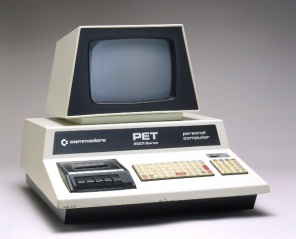
Improbable PC pioneer
The PC industry is so young that a remarkable percentage of its most significant figures are still with us. But it lost a key one on Sunday when Jack Tramiel, the founder of Commodore, died at 83. Commodore was one of the first important PC companies, and Tramiel, in his own idiosyncratic manner, played a vital role in getting the PC revolution underway.


Thursday, February 10, 2011
Built DEC into a power
A pioneer in computing, but short-sighted when it came to personal computers.
Ken Olsen helped reshape the computer industry as a founder of the Digital Equipment Corporation, at one time the world’s second-largest computer company ... built Digital on $70,000 in seed money, founding it with a partner in 1957 in the small Boston suburb of Maynard, Mass. With Mr. Olsen as its chief executive, it grew to employ more than 120,000 people at operations in more than 95 countries, surpassed in size only by I.B.M. At its peak, in the late 1980s, Digital had $14 billion in sales and ranked among the most profitable companies in the nation. But its fortunes soon declined after Digital began missing out on some critical market shifts, particularly toward the personal computer. Mr. Olsen was criticized as autocratic and resistant to new trends. “The personal computer will fall flat on its face in business,” he said at one point
Ken Olsen helped reshape the computer industry as a founder of the Digital Equipment Corporation, at one time the world’s second-largest computer company ... built Digital on $70,000 in seed money, founding it with a partner in 1957 in the small Boston suburb of Maynard, Mass. With Mr. Olsen as its chief executive, it grew to employ more than 120,000 people at operations in more than 95 countries, surpassed in size only by I.B.M. At its peak, in the late 1980s, Digital had $14 billion in sales and ranked among the most profitable companies in the nation. But its fortunes soon declined after Digital began missing out on some critical market shifts, particularly toward the personal computer. Mr. Olsen was criticized as autocratic and resistant to new trends. “The personal computer will fall flat on its face in business,” he said at one point
Subscribe to:
Posts (Atom)